Modular Storefront System for 2,000+ Retailers
Led the end-to-end UX of a 0→1 modular commerce platform at Brahms, scaling storefront launches to 2,000+ stores.
E-Commerce · B2B2C
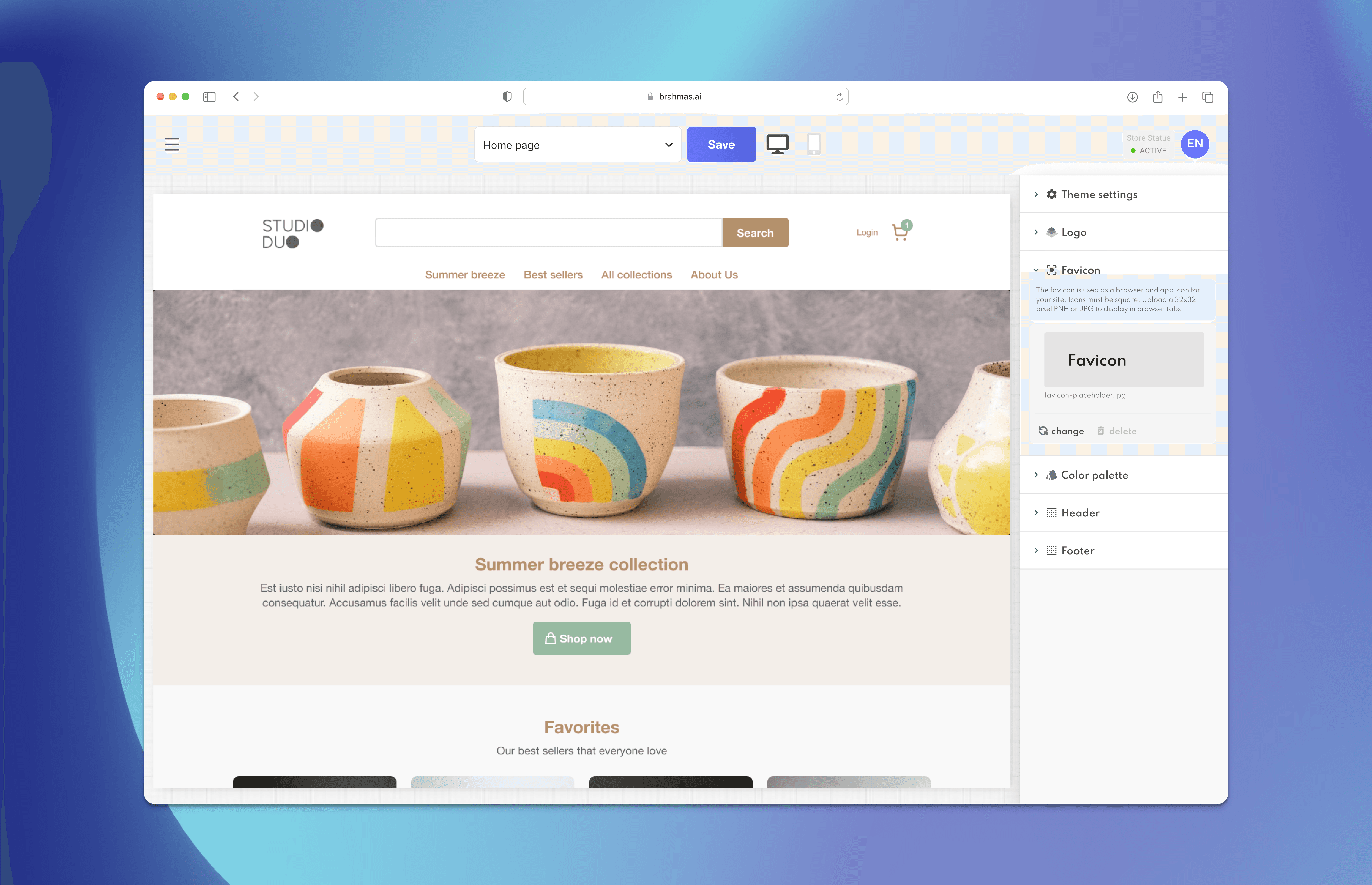
Project summary
Role: Product Designer at Brahms.AI
Team: 2 product designers, 1 PM, 2 Engineer, 2 QA
Timeline: 2022
Platform: Web and mobile
Market: US, UK
Brahms was a 0→1 e-commerce platform built to compete with Shopify-level builders. I worked on the design of a modular theme builder and store editor that enabled large retail brands to launch customizable storefronts without custom development.
The system was validated through pilots such as Pier 1 and RadioShack, and later scaled to support 2,000+ stores across multiple industries.
-
My role
I owned research and best practices for e-commerce, created the baseline for UI project, and the end-to-end UX design of the modular theme builder and editor.
I influenced product decisions around theme modularity, customization constraints, and scalability trade-offs, and collaborated with Product, Engineering, and QA on feasibility and pilot validation
Context & Problem
Problem
Before this project, theme customization relied heavily on predefined layouts. This limited flexibility for merchants, slowed iteration, and made it difficult to scale design variations across industries.
Key challenges included:
Limited customization without breaking layouts
High dependency on predefined themes
Slow theme creation and adaptation
Difficulty maintaining consistency as the platform scaled
The core question became:
How might we enable customization without sacrificing usability, consistency, or scalability?
Inputs & Research
Rather than formal user research, design decisions were informed by multiple inputs:
Competitive analysis of existing e-commerce builders and theme systems
Qualitative customer insights shared by the Product Manager from sales and support conversations
Industry benchmarks, particularly Baymard Institute guidelines for e-commerce usability and layout patterns
Platform and technical constraints were defined in collaboration with engineering
This approach helped reduce risk by grounding decisions in proven patterns while the product matured.
Design approach
I treated this as a system design problem, not a UI customization task. I was responsible for defining the system architecture, interaction model, and design principles that guided how themes were composed and customized.
Key principles included:
Modularity: pages built from reusable, interchangeable sections
Constraints by default: limiting options to prevent broken or inconsistent layouts
Predictability: components behaving consistently across contexts
Progressive control: exposing customization gradually to reduce cognitive load
Design decisions were intentionally conservative, prioritizing usability and scalability over maximum freedom.
Solution overview
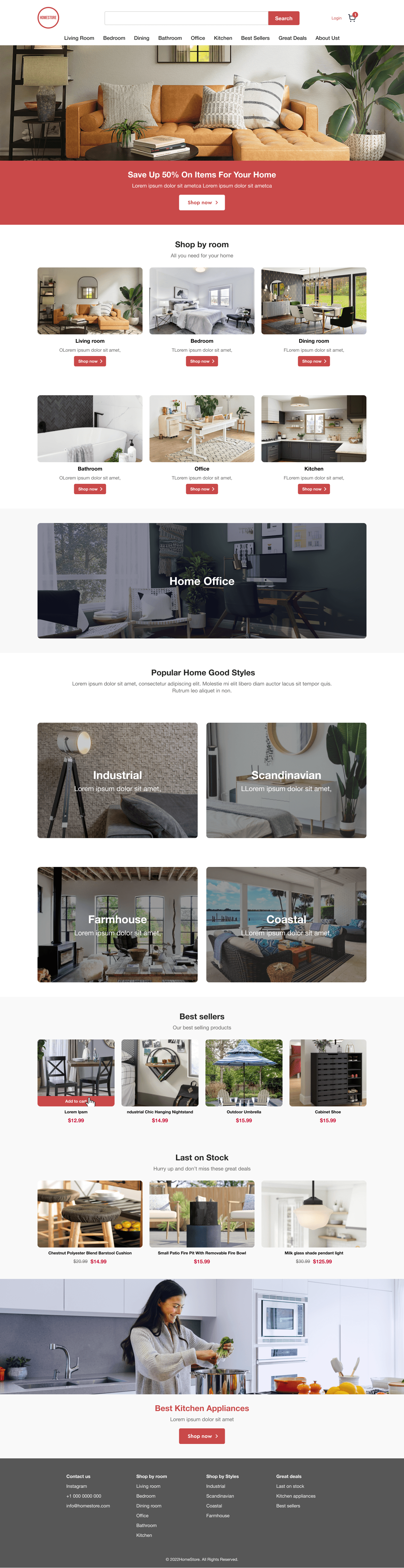
A modular theme system composed of configurable sections (e.g. hero, product grids, navigation, footer) and a visual editor that allowed merchants to assemble and customize stores without code, while preserving system rules.
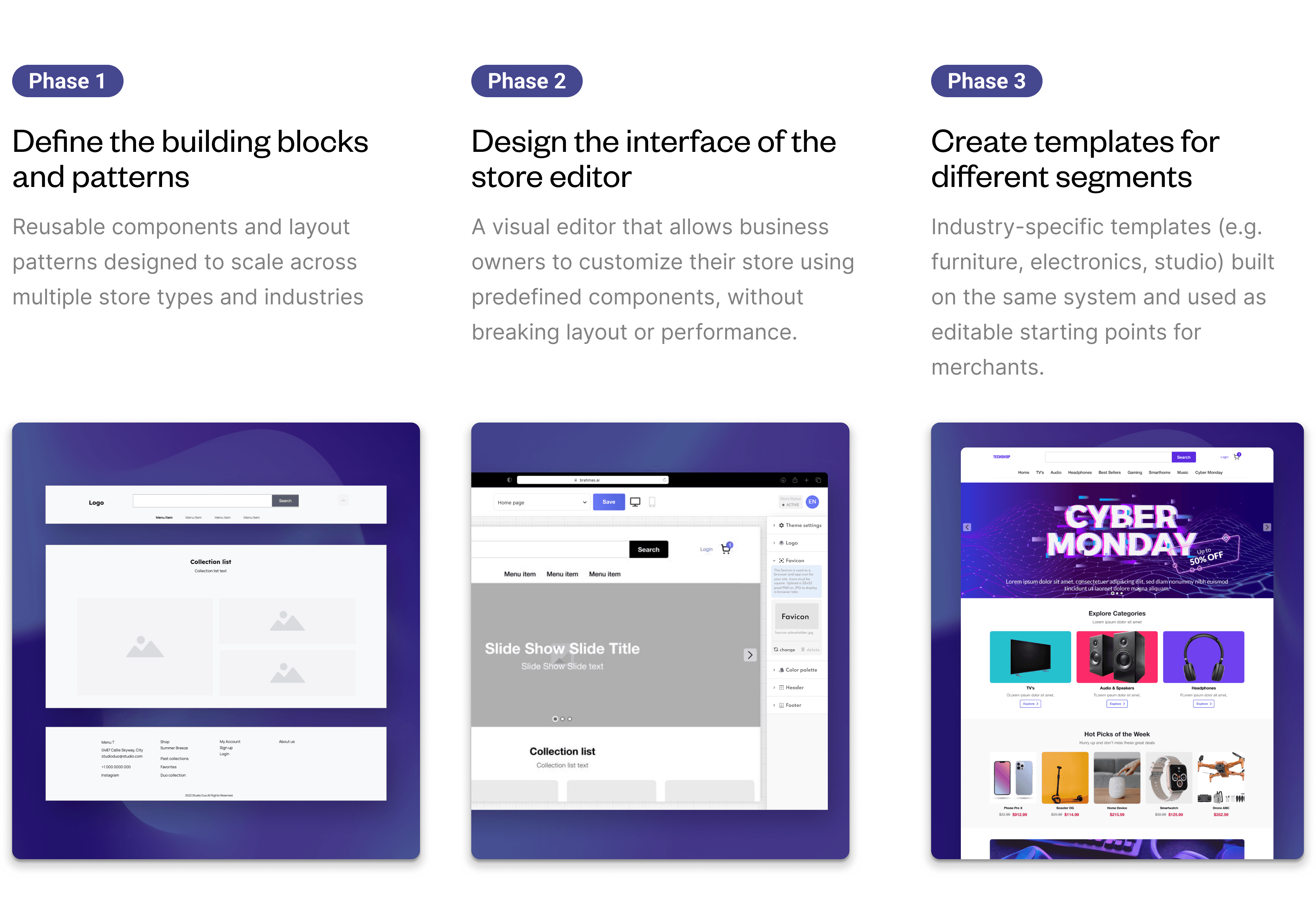
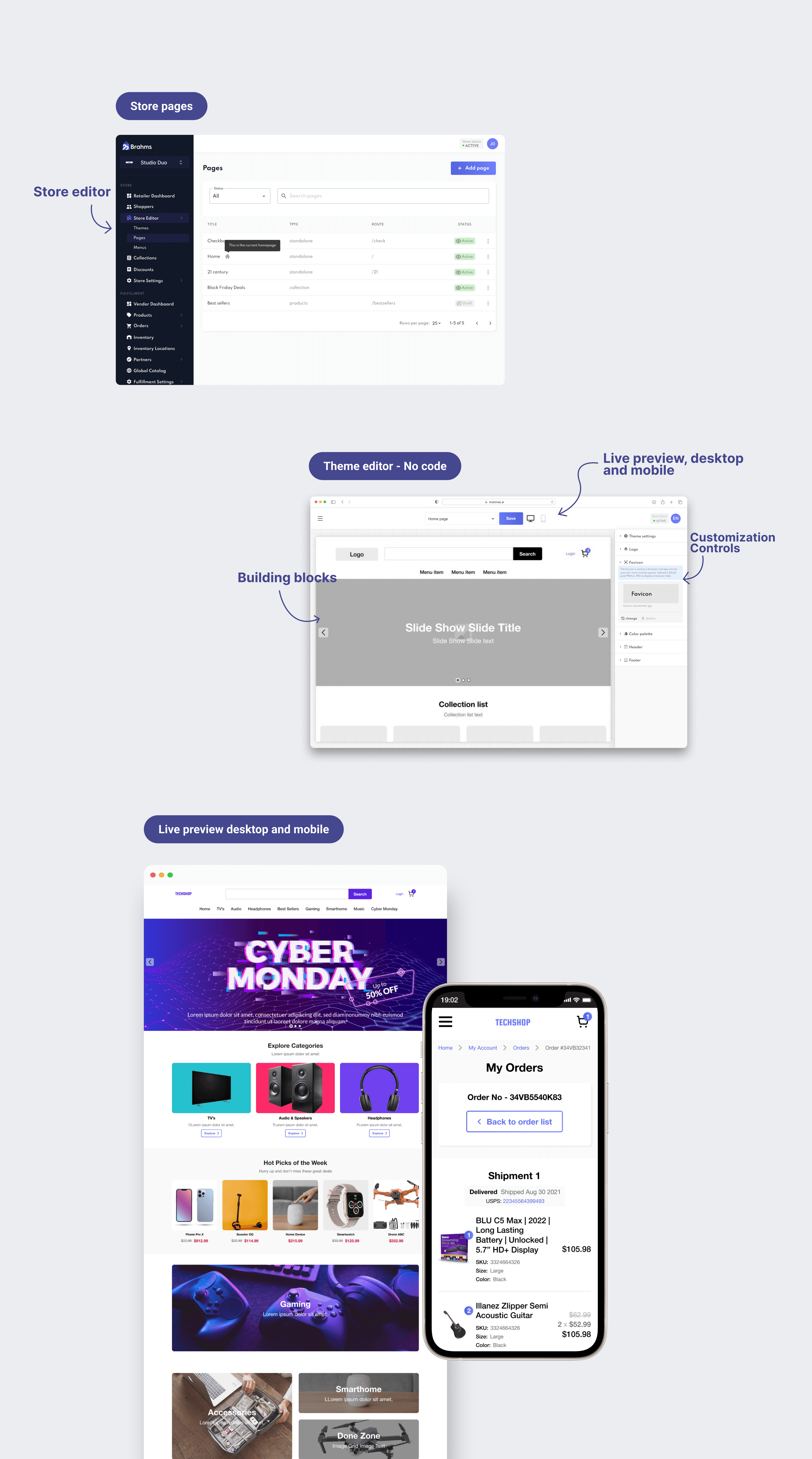
Templates as systems
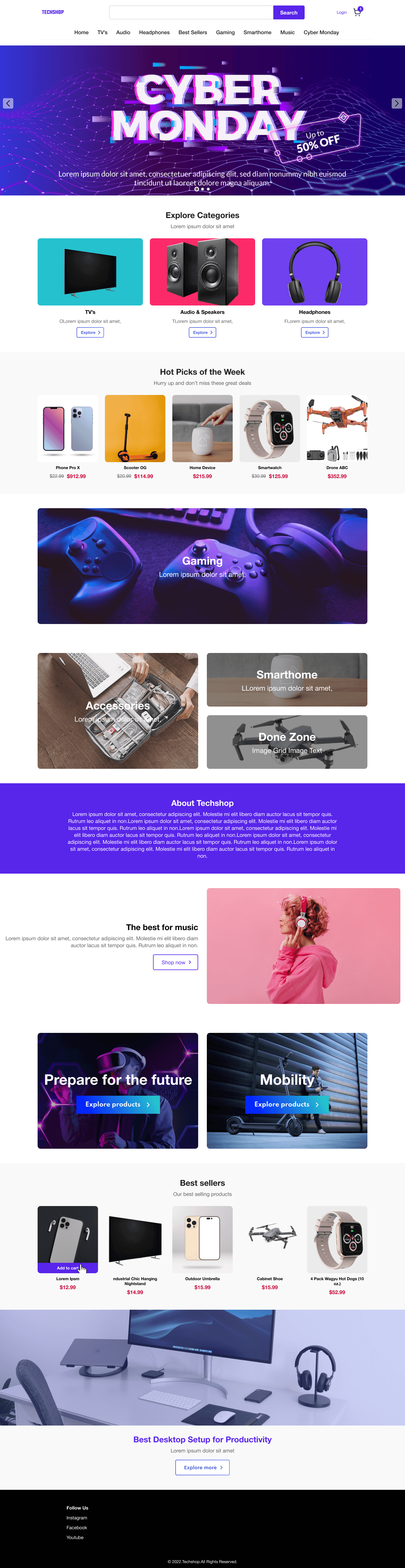
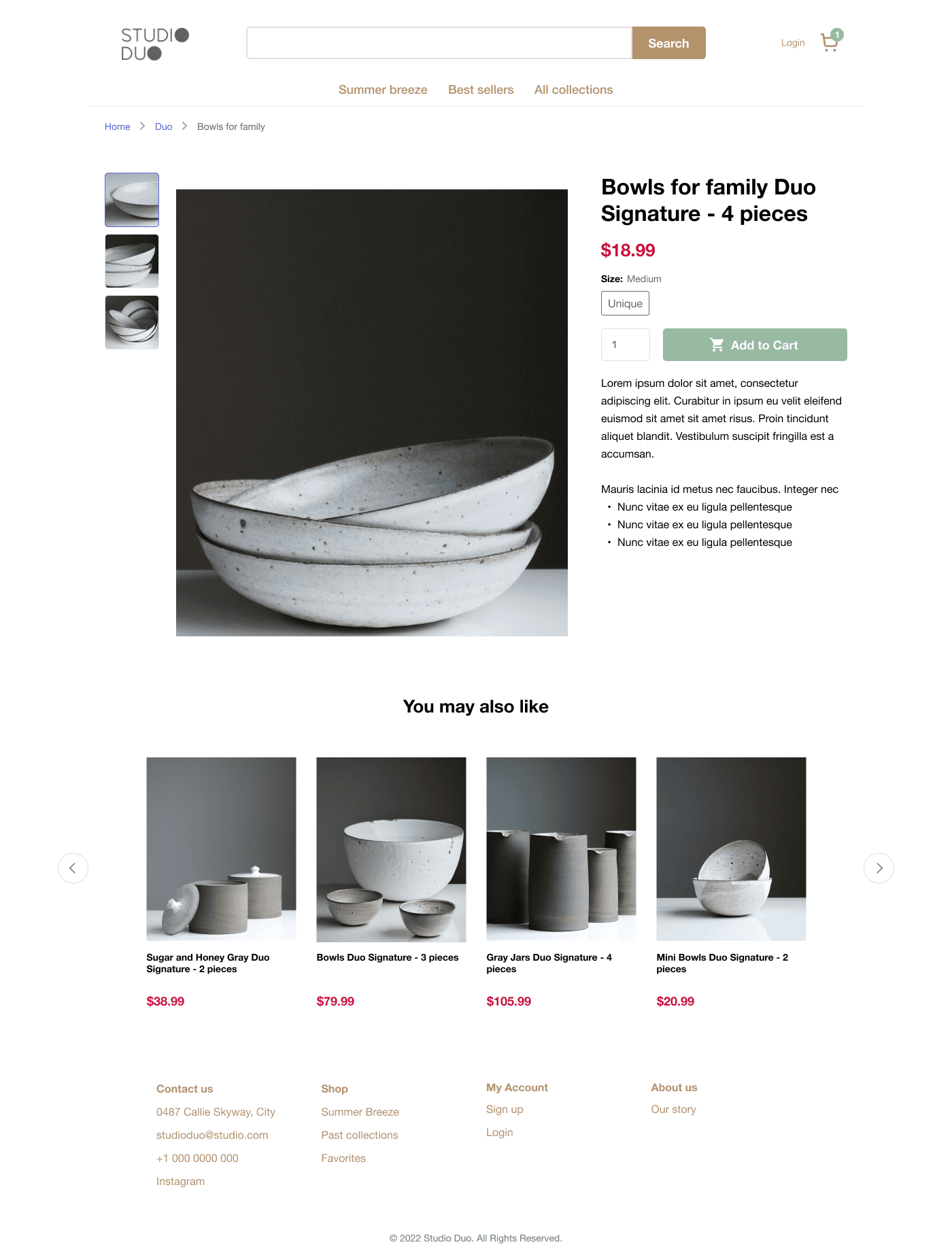
To reduce setup friction, I designed industry-specific starter templates (e.g. furniture, electronics, creative studios).Each template was built as a reusable system, not a one-off layout. The same components and layout rules worked consistently across all core pages:
Home
Product listing
Product detail
About
Checkout
This allowed merchants to start from a proven baseline and adapt layouts visually while preserving best-practice patterns across the full store experience.

Outcomes & Impact
MVP successfully launched and validated through pilot stores such as Farmers Cart and Pier 1
Modular system significantly improved design flexibility compared to previous static layouts
Faster theme creation and adaptation for merchants
Established a scalable foundation that supported 2,000+ stores across multiple sectors
(Quantitative UX metrics were not available at launch; success was evaluated through adoption, internal feedback, and system scalability.)
Reflection
This project reinforced the importance of system-level design in e-commerce platforms. Rather than focusing on individual screens, the real impact came from defining rules, components, and constraints that could scale with the business.
If revisiting the project, I would validate the editor experience earlier with first-time merchants, introduce clearer guidance for high-performing layouts, and instrument analytics to track long-term merchant behavior.